Beat Camera Anxiety with These 3 Powerful Mindset Shifts
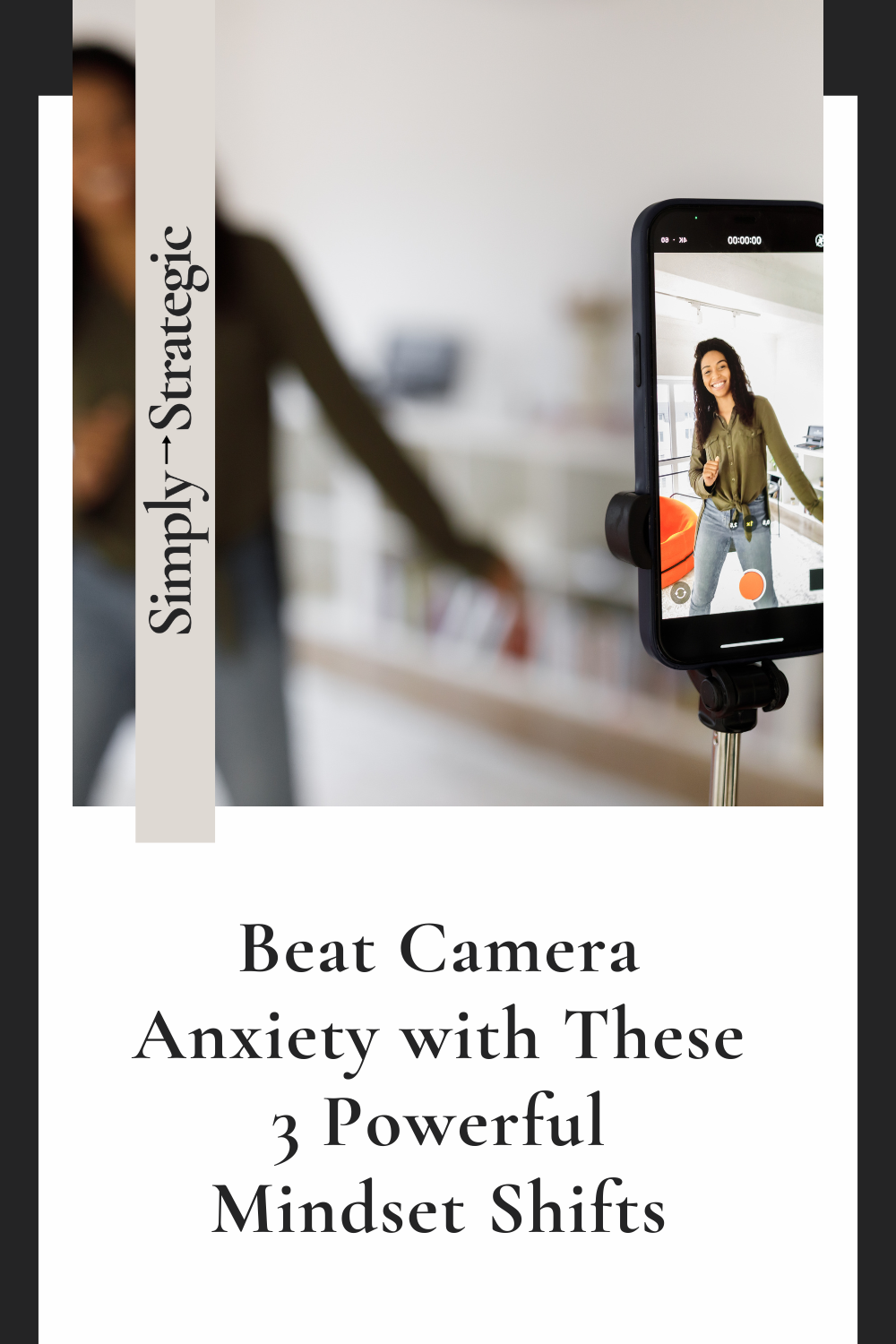
There is nothing that will make me procrastinate faster than the thought of getting on camera.
I mean it. Suddenly, my website needs tweaking. The dishes need doing. The laundry isn't going to sort itself. Anything to avoid that blinking red light.
But here's what I've learned: I'm not alone. So many brilliant, capable coaches feel exactly the same way. And the frustrating part? Getting on camera is one of the most powerful ways to build trust with your audience. Video helps people feel like they know you before they ever book a call.
So if camera anxiety is keeping you from showing up, it's worth working through it.
The good news is that on-camera confidence is a skill. You can build it. And while having a tidy background and good lighting definitely helps, most of what holds us back isn't external. It's the stuff going on in our heads.
So let's talk about three mindset shifts that can move you from camera shy to camera ready.
These aren't fluff. They're practical, and you can start using them today.
But first, let's talk about why this is so hard.
Why the Camera Feels So Uncomfortable
Camera shyness isn't really about forgetting your words or stumbling over a sentence. It runs a little deeper than that.
Being on camera means being seen. It means opening yourself up to judgment, and that vulnerability can feel really uncomfortable. Whether you're recording a YouTube video, hopping on a Zoom call with a client, or filming a quick Instagram video, the camera has a way of making every small imperfection feel enormous.
A lot of coaches also worry about whether they come across as credible. That's where imposter syndrome tends to show up, and it often hits hardest when a camera is involved.
Here's what I want you to know: this is not a personal failing. It's one of the most common challenges coaches face. Even people who look completely natural on camera felt awkward at first.
The goal isn't to eliminate the discomfort entirely. It's to stop letting it run the show.
Mindset Shift #1: From Perfection to Progress
One of the fastest ways to drain your confidence is to chase a perfect performance.
When you go into a recording thinking everything has to be flawless, every little stumble feels like a disaster. The pressure builds, the anxiety spikes, and suddenly you've done seventeen takes and still don't love any of them.
Here's the reframe: getting on camera isn't a performance. It's a practice.
A few ways to put this into action:
After you record something, before you poke holes in it, name one thing that went well. Maybe your energy felt right. Maybe you explained something clearly. Start there. Momentum builds on wins, not on criticism.
Set a learning goal instead of a performance goal. Instead of "I need to nail this," try "I want to work on speaking a little slower today." One small, specific thing to focus on makes the whole experience more manageable.
After each recording, pick one thing to improve next time. Just one. Continual, small improvements add up fast. And they feel a lot better than trying to be perfect right out of the gate.
Your audience isn't looking for a polished presenter. They're looking for someone they can connect with. Genuine and a little imperfect beats perfectly scripted every single time.
Mindset Shift #2: From Fear of Judgment to Authentic Connection
When the camera is rolling, it's easy to feel like everyone is watching and waiting for you to mess up.
That fear is real. But it can also cause you to over-script, stiffen up, and lose the natural, conversational energy that makes video content actually work.
Here's the shift: stop thinking about how you're coming across and start thinking about who you're talking to.
You're not performing for a panel of critics. You're talking to someone who showed up because they want what you know. They're already on your side.
A few ways to make this shift:
Focus on the message, not yourself. When your attention is on the value you're sharing instead of on how you look sharing it, something shifts. The self-consciousness quiets down a little.
Think of one specific person you're talking to. Not a crowd. One person who needs what you're about to say. It changes the whole energy of how you show up.
Let yourself be real. Share a relevant story. Acknowledge if you're figuring something out as you go. Authenticity builds trust faster than polish does. People don't want to follow someone who seems untouchable. They want someone who feels like they actually get it.
Mindset Shift #3: From Imposter Syndrome to Owning Your Expertise
Imposter syndrome and cameras are a rough combination.
That voice that says you're not qualified enough, not experienced enough, not ready yet. It gets louder when you're about to press record.
Here's what's worth knowing: imposter syndrome is incredibly common, especially among high achievers. It doesn't mean you're actually an imposter. It means you care about doing good work.
Some practical ways to push back on it:
Write down what you know. Your credentials, your client wins, the transformations you've helped people through. Keep that list somewhere visible. Read it before you record. It's a tangible reminder that you've earned the right to show up.
Teach what you know. One of the best antidotes to imposter syndrome is actually sharing your expertise. When you put it out there and people respond, it reinforces that what you know has real value.
Stay curious. Keep learning in your area of expertise. Not because you're not enough, but because you're committed to being a great coach. That commitment is its own form of confidence.
Share the messy parts. You don't have to have a perfectly polished story. Talking about a challenge you worked through, something you got wrong and learned from, is often more powerful than sharing only the wins. It makes you human. And it builds real trust.
One More Thing: What to Do with the Negative Thoughts
Negative thoughts before a recording are almost inevitable.
"I'm going to mess this up."
"I don't look right."
"Nobody's going to watch this anyway."
You can't always stop them from showing up. But you don't have to let them be in charge.
When a negative thought shows up, notice it. Name it. Then ask yourself: is this actually true, or is it just fear? Most of the time, it's fear.
Replace the thought with something specific and realistic. Not "I'm amazing and this will be perfect," but "I've prepared for this and I have something useful to say." That's enough.
Visualization also helps more than people expect. Take a few minutes before you record to picture the conversation going well. Not perfectly. Just well. It sounds simple, but it does something for your nervous system.
And if you can, find one person whose feedback you trust and share your work with them.
Getting a real, outside perspective can quiet a lot of the internal noise.
Getting on camera consistently is one of the ways fitness and wellness coaches build real authority online. Not overnight, but over time. The coaches who show up regularly, even when it feels uncomfortable, are the ones whose audiences start to feel like they already know them before they ever reach out.
You don't need to be perfect at this. You just need to keep going.
Start with one shift. Then the next. Your audience is waiting to hear from you.